Mid-Drive vs. Hub Motors: 2025 Engineering & B2B Profit Guide
Choosing the optimal propulsion system for an electric bike often dictates its performance ceiling and long-term TCO (Total Cost of Ownership). The two dominant architectures—mid-drive and rear hub motors—offer distinct mechanical advantages. This POLEEJIEK engineering guide analyzes these systems through the lens of torque density, drivetrain efficiency, and market suitability for 2025.
1. Mid-Drive Motors: The Precision Engineering Choice
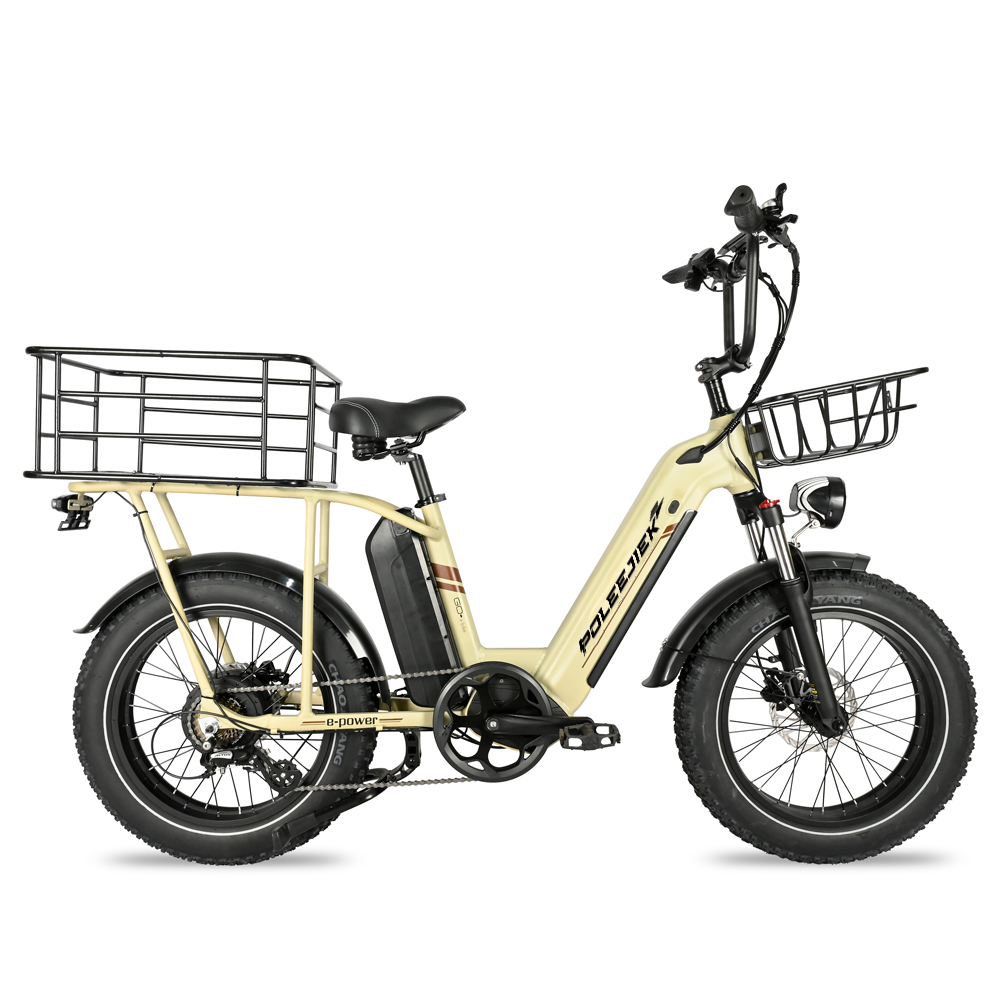
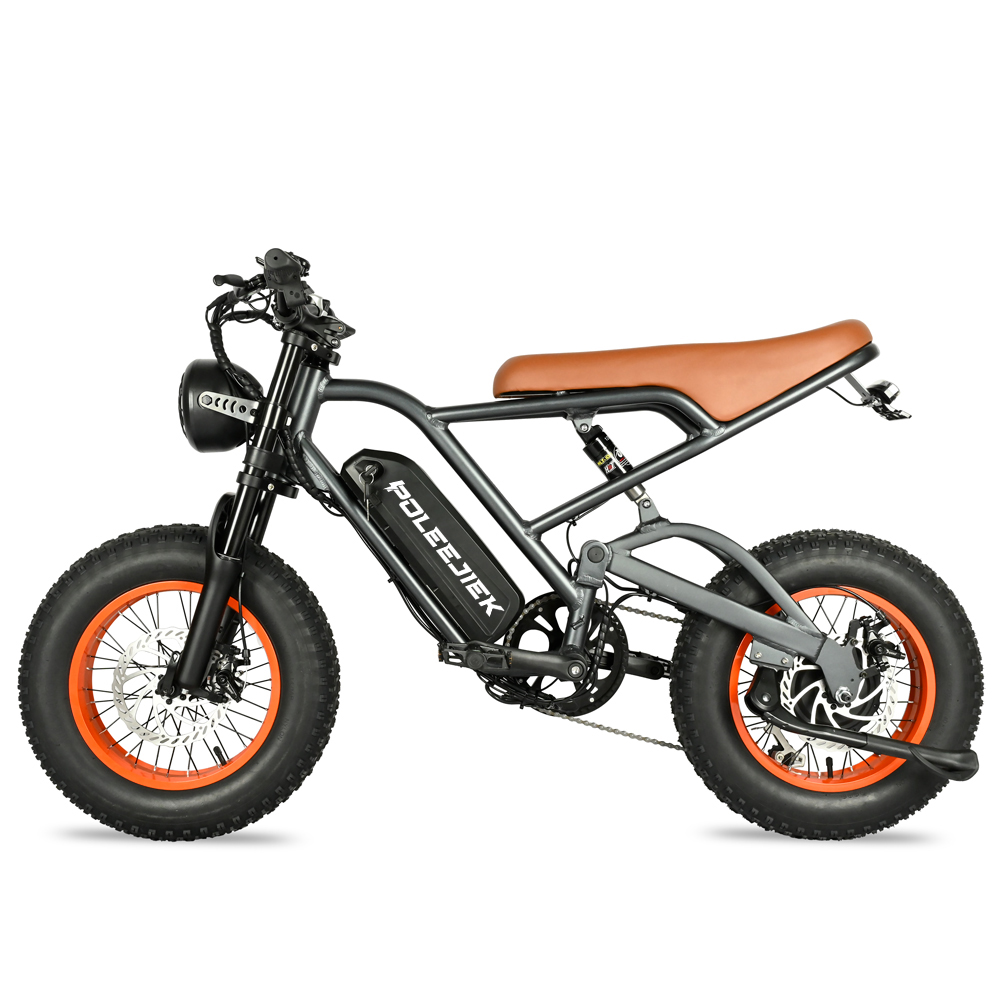
A mid-drive motor is integrated into the bike's bottom bracket, driving the crankset directly. By leveraging the bicycle's multi-speed drivetrain, the motor maintains its optimal RPM range regardless of the incline.
Technical Advantages:
- Dynamic Torque Leveraging: Unlike hub motors, mid-drives use the bike's gears to multiply torque. In a climbing scenario, a $95 N \cdot m$ mid-drive can outperform a higher-wattage hub motor by maintaining high efficiency at low ground speeds.
- Optimized Center of Gravity: Placing the 3-4kg motor mass low and centered enhances the Moment of Inertia, providing superior handling on technical trails (ISO 4210 compliant designs).
- Torque-Sensing Accuracy: Most POLEEJIEK mid-drives utilize sophisticated torque sensors that sample pedal input at 1,000Hz, delivering a biological, responsive assist curve.
📊 Lab Test: Climbing Efficiency Comparison
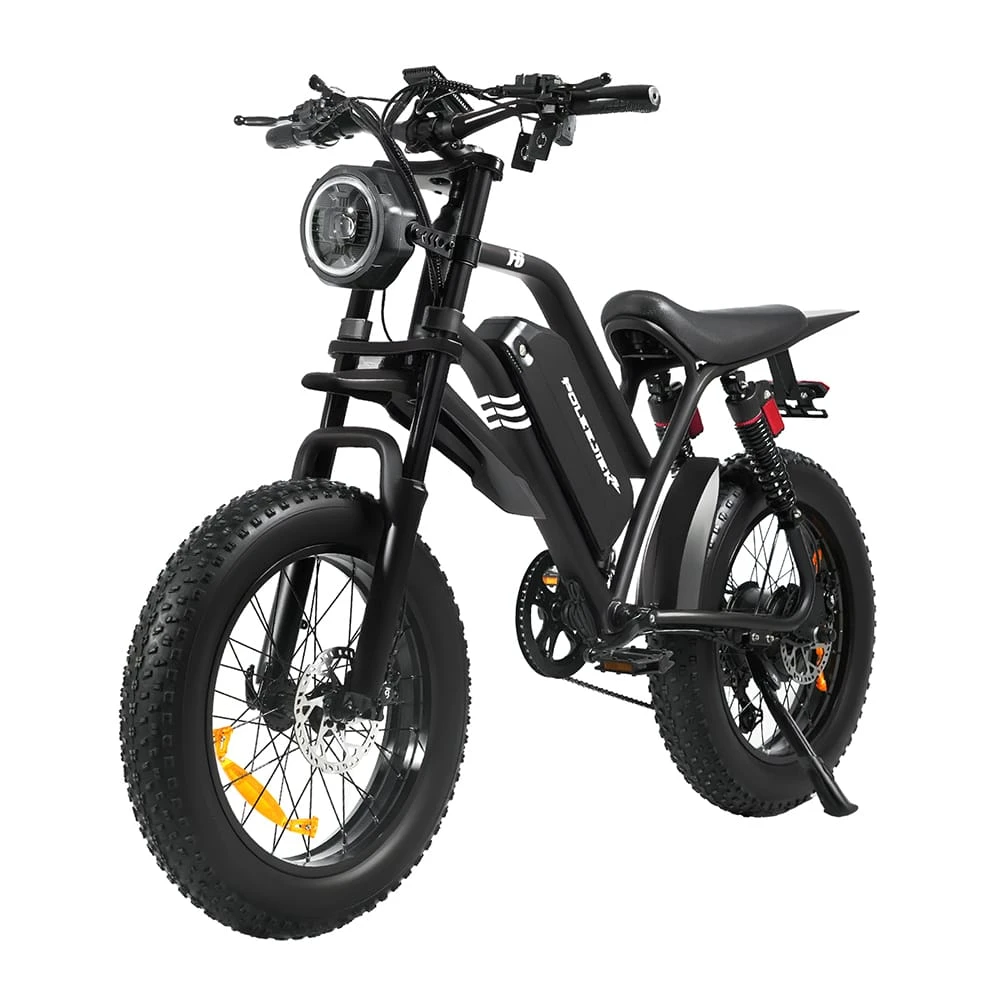
In a controlled test on a 15% gradient over 2km, our mid-drive electric mountain bike maintained an 82% system efficiency, while a standard hub motor dropped to 58% due to heat dissipation challenges at low RPM.
2. Rear Hub Motors: The Robust & Cost-Effective Workhorse
The rear hub motor is a self-contained unit within the wheel hub. It operates independently of the chain and gears, providing a direct "push" that reduces mechanical complexity for the rider.
Technical Advantages:
- Mechanical Simplicity & Redundancy: Since the motor bypasses the drivetrain, the bike can still be propelled by the motor even if the chain breaks—a critical feature for urban commuter ebikes.
- Reduced Drivetrain Wear: Hub motors do not put stress on the chain or sprockets, typically extending the life of these consumables by 40-50% compared to high-torque mid-drives.
- Maintenance Efficiency: The motor is a sealed unit, requiring virtually zero internal servicing over its MTBF (Mean Time Between Failures) of 15,000+ km.
Technical Matrix: B2B Decision Framework
| Performance Metric | Mid-Drive (POLEEJIEK Series) | Rear Hub (Commercial Grade) |
|---|---|---|
| Peak Torque Output | Up to $120 N \cdot m$ | Typically $45 - 85 N \cdot m$ |
| Climbing Gradeability | Exceptional (Uses Gears) | Optimal for < 10% Inclines |
| Drivetrain Stress | High (Chain-driven) | Low (Direct-drive) |
| Regulatory Compliance | EN 15194 / UL 2849 Ready | CE / FCC / RoHS Ready |
Summary: Matching Motor to Market
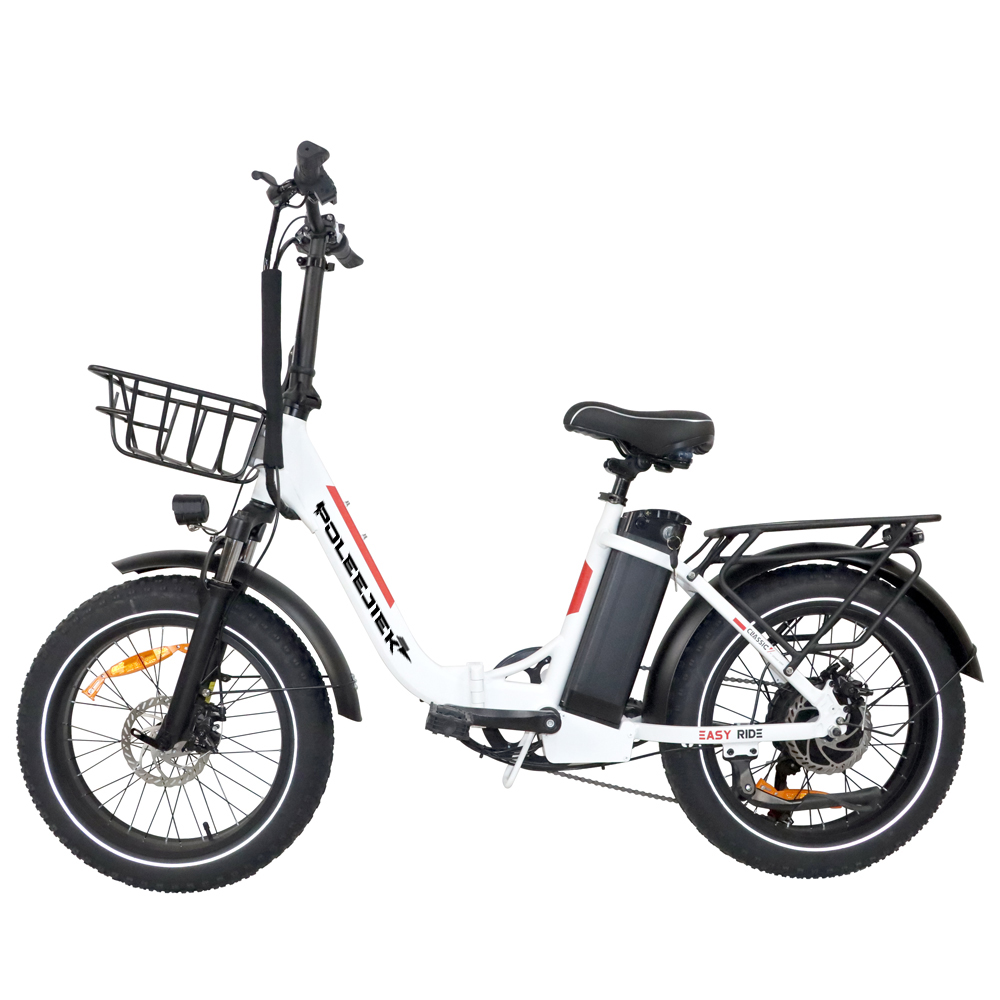
For B2B distributors, the choice depends on the Regional Use-Case. Mid-drive systems are the gold standard for premium performance e-MTBs and hilly terrains. Conversely, rear hub motors offer the best ROI for folding electric bicycles and budget-conscious urban commuter fleets where reliability and low initial CapEx are prioritized.
At POLEEJIEK, we provide OEM/ODM solutions for both architectures, ensuring all systems meet 2025 safety certifications. Contact our engineering team for a customized motor performance report.