Can You Ride an Electric Dirt Bike in Snow? The Ultimate Winter Riding Guide (2025)
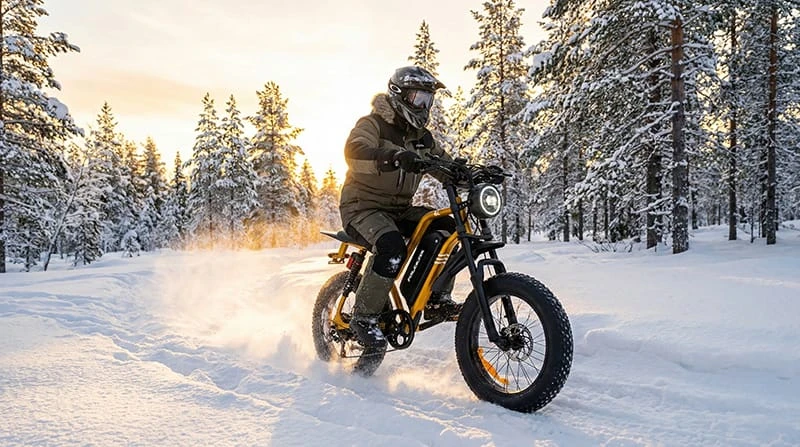
For most cyclists, December marks a somber tradition: cleaning the bike, lubricating the chain, and locking it away in the garage until the spring thaw. This is a missed opportunity. With the right equipment and knowledge, winter isn't the end of the riding season—it is the beginning of an entirely new adventure.
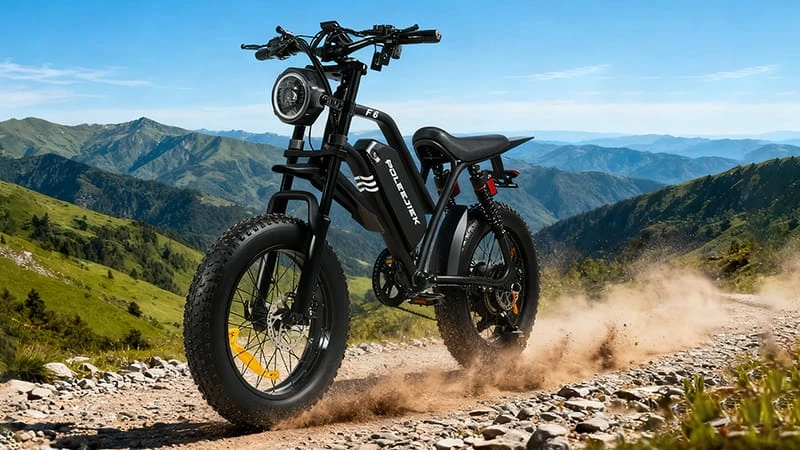
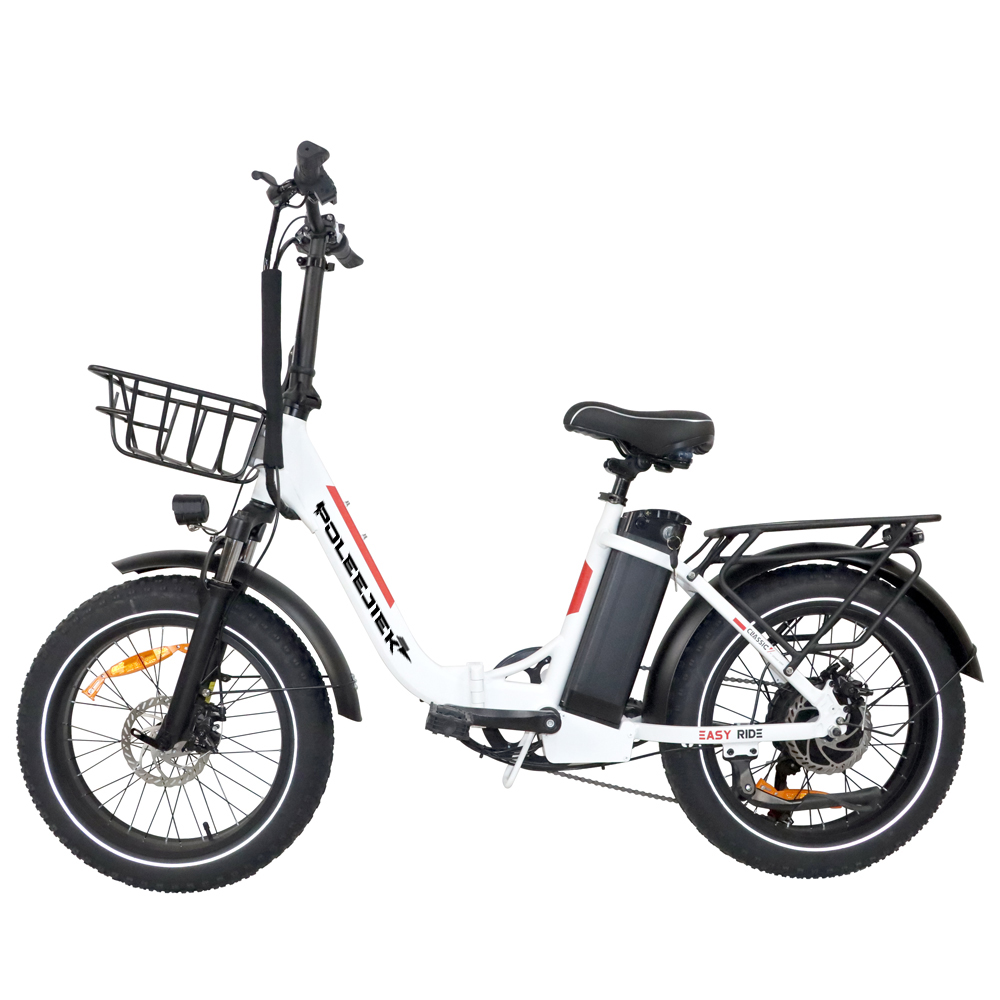
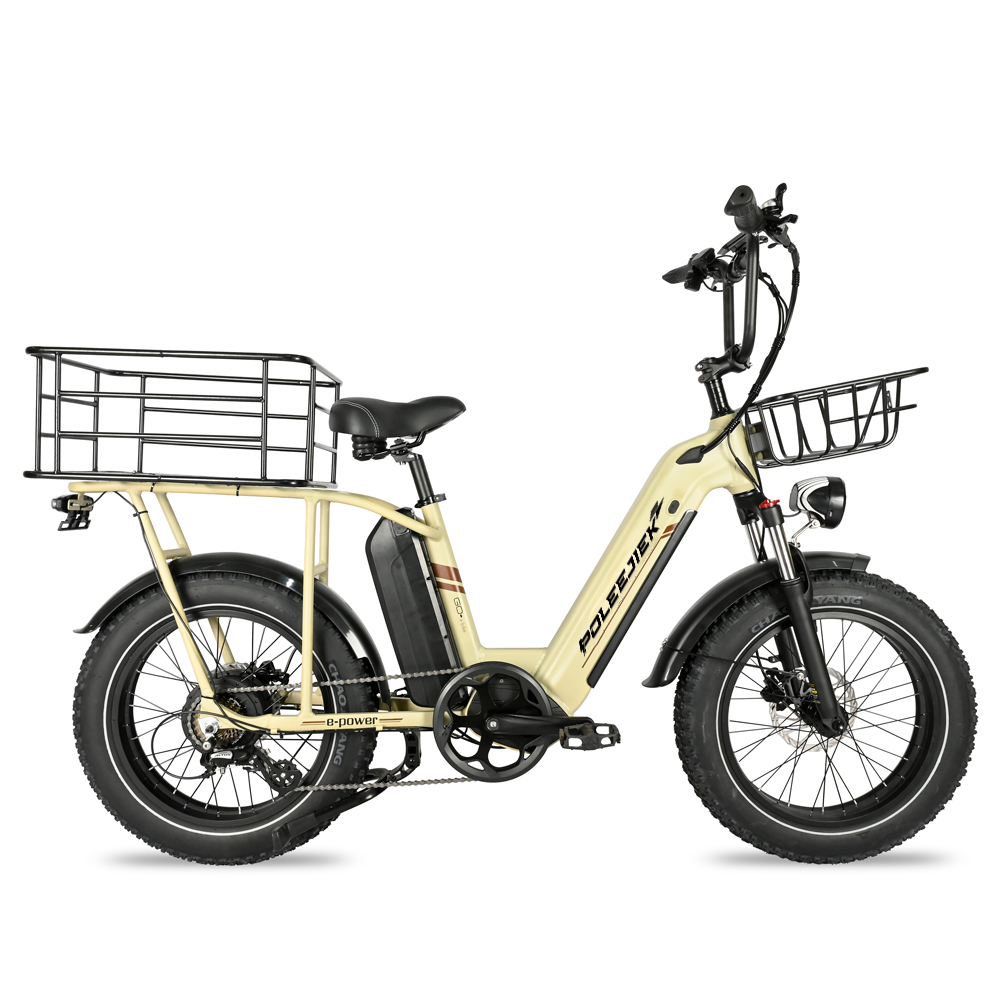
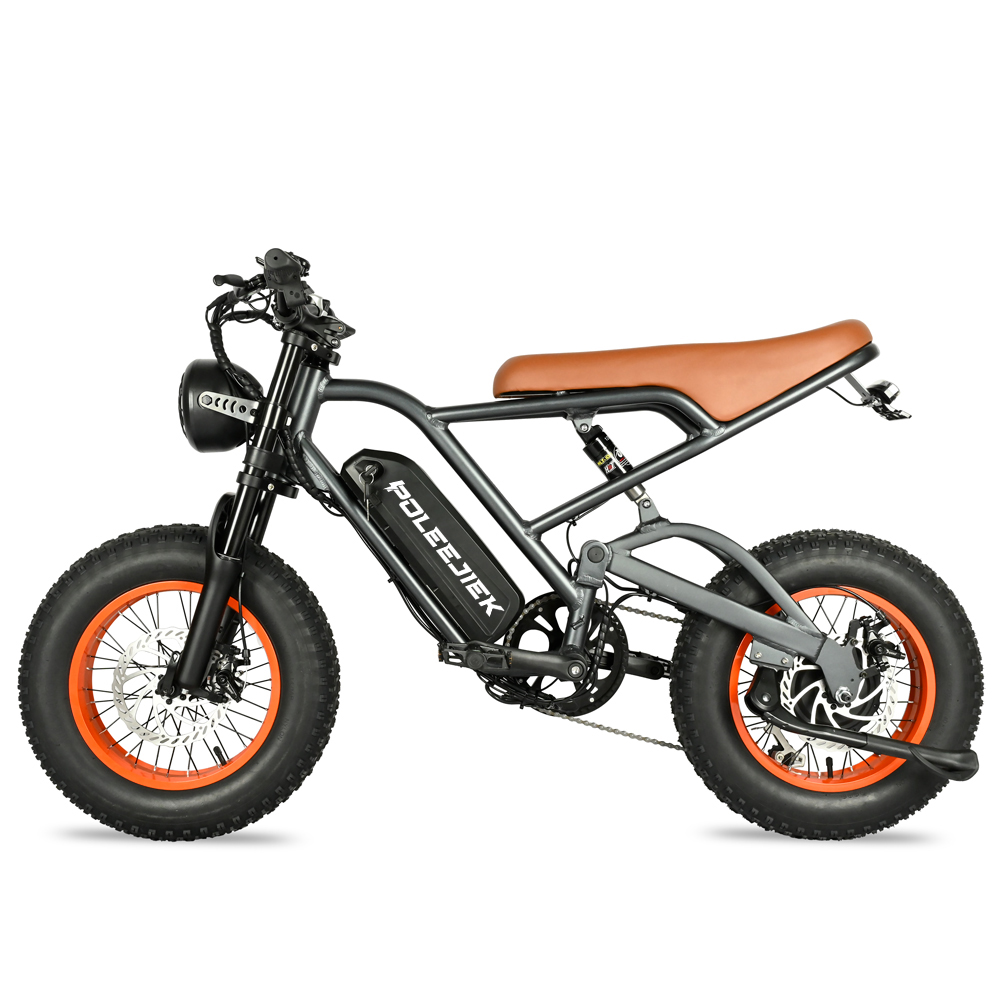
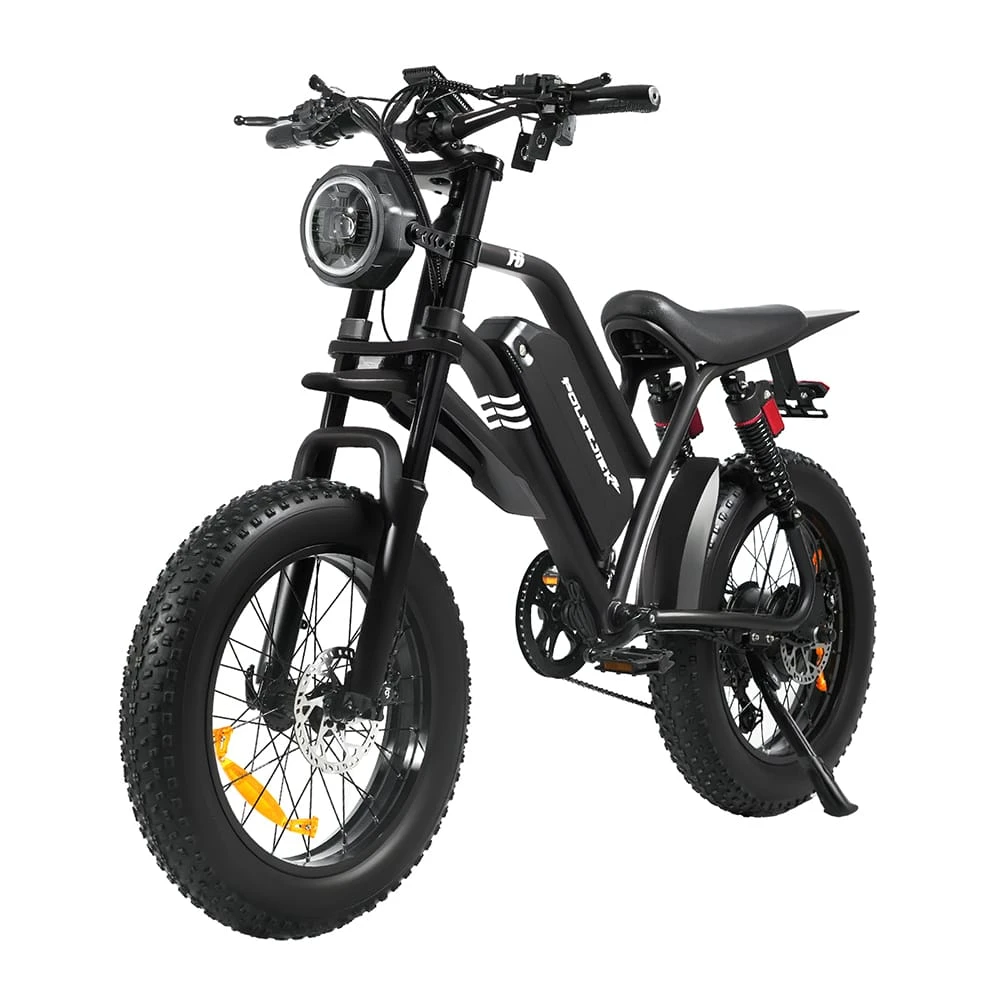
If you own a fat tire electric bike, specifically a robust model like the POLEEJIEK F6, you don't just own a commuter vehicle; you own a potential electric snow bike.
Riding in the snow offers a serenity and technical challenge that summer trails cannot match. However, the physics of winter riding are different. The margin for error is smaller, and the demands on your machine are higher.
This guide provides a technical deep dive into converting your winter mindset. We will cover why fat tires are non-negotiable, how to manage battery chemistry in freezing temperatures, and the specific riding techniques required to conquer the cold.
Why You Need a "Fat Tire" Electric Dirt Bike for Winter
Not all electric bikes are created equal, especially when the temperature drops and the ground turns white. Standard commuter e-bikes with thin (2.0-inch or narrower) tires are dangerous in snow. They act like pizza cutters, slicing through the surface and getting stuck in the drifts below.
To ride safely in winter, you need specific hardware advantages found in a specialized fat tire electric dirt bike.
1. Traction is King: The Physics of Flotation
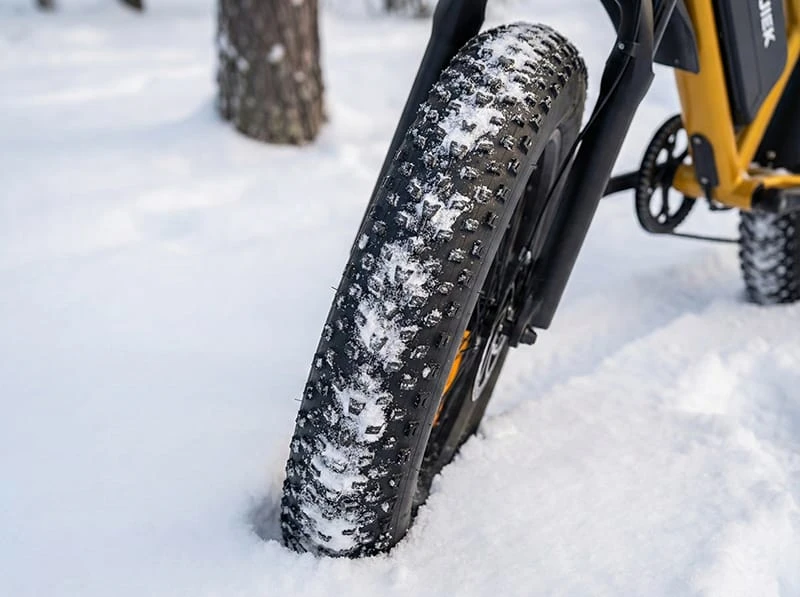
The primary challenge of snow is a lack of friction combined with a soft surface. The POLEEJIEK F6 is equipped with 4-inch fat tires. In the world of off-road physics, width equals flotation.
A 4-inch tire has a significantly larger contact patch than a standard tire. This distributes the weight of the bike and rider over a wider surface area, allowing the bike to "float" on top of packed snow rather than sinking into it. This is the same principle used by snowshoes. When you are riding on loose powder or slush, this flotation is the difference between riding and walking your bike home.
2. Stability on Unpredictable Surfaces
Winter roads are rarely uniform. You will encounter patches of dry asphalt, slush, packed snow, and hidden ice—often within a span of 100 yards.
The wider footprint of a fat tire electric dirt bike provides lateral stability. When a thin tire hits a rut under the snow, it tends to twist the handlebars, leading to a crash. A fat tire absorbs these irregularities. Furthermore, the F6 features a reinforced steel frame. While slightly heavier than aluminum, steel offers excellent vibration absorption and keeps the bike planted on the ground, providing a lower center of gravity that is crucial when traction is compromised.
3. Power Through the Slush
Snow creates significant rolling resistance. Pedaling a manual bike through three inches of snow feels like riding uphill in sand. You need torque.
The F6 boasts a 1500W Peak Motor. This high wattage isn't just for speed; in winter, it is for momentum maintenance. When you hit a patch of deep, wet sludge (often called "brown sugar" snow), low-powered motors will bog down. The 1500W peak output allows you to power through these high-resistance areas without losing balance.
Related: Learn more about the advantages of our hardware in our guide to the best fat tire e-bike motors.
5 Essential Tips for Safe Winter Riding
Owning the right off road electric bike is step one. Step two is adapting your riding style. Winter riding requires a shift from aggressive speed to calculated control.
1. Lower Your Tire Pressure (The 5-10 PSI Rule)
This is the single most important adjustment you can make. On pavement, you likely run your F6 tires at 20-30 PSI for efficiency. In snow, that is too hard.
You must lower your tire pressure, typically to between 5 and 10 PSI.
- Why? Lower pressure allows the tire sidewall to flex. The tire flattens out, drastically increasing the surface area gripping the ground. It also allows the tire to mold over ice ridges rather than bouncing off them.
- The Risk: Be careful of "pinch flats" if you hit a sharp rock hidden under the snow. However, for soft snow, low pressure is mandatory for traction.
2. Master the Throttle: Linear Acceleration
The F6 is powerful, but in winter, power must be applied gently. If you jam the throttle on a snowy surface, the rear wheel will spin, and the bike will slide out sideways.
Practice "feathering" the throttle. You want to find the traction limit—the point just before the wheel starts to spin. The goal is to maintain momentum without breaking traction. If you do start to slide, do not slam on the brakes. Ease off the throttle and gently steer into the slide to regain control.
3. Dress for the Slide (and the Cold)
Wind chill is a significant factor on an e-bike. Traveling at 20 MPH in 30°F weather creates a wind chill effectively much lower.
- Hands: Your hands are the first to freeze. Use heavy ski gloves or install "Bar Mitts" on your handlebars.
- Vision: Snow blindness and cold wind can make your eyes tear up, blinding you. Wear clear goggles or ski goggles.
- Tech: One underrated feature of the F6 for winter is the NFC Lock. Fumbling for keys with thick winter gloves is frustrating. The NFC card or phone unlock means you can start your ride without exposing your hands to the cold.
4. Battery Warm-Up Protocols
Lithium-ion batteries, like the 48V 20Ah unit in the F6, rely on chemical reactions to release energy. Cold temperatures slow these reactions down.
- Never charge a frozen battery. If your bike has been outside in freezing temps, do not plug it in immediately. Charging a battery below freezing can cause permanent damage to the anode (lithium plating).
- Bring it inside. Always detach the battery and bring it indoors to room temperature before charging.
- Ride immediately. If possible, keep the battery warm until the moment you ride. A warm battery performs better than a cold one.
5. Watch for "Black Ice"
Black ice is a thin glaze of ice that is transparent, allowing the black asphalt to show through. It looks like a wet puddle but has zero traction.
- Detection: Look for patches on the road that look "glossy" or "wet" when the rest of the road is dry dull gray.
- Reaction: If you hit black ice, do nothing. Do not brake. Do not turn. Do not accelerate. Coast in a straight line until you cross it. Any sudden input will cause a crash.
Is Your E-Bike Waterproof? Understanding IP Ratings
One of the most common questions we receive at POLEEJIEK is regarding water and snow damage. Winter riding involves snow, which eventually melts into water, often mixed with road salt.
The F6 Advantage: IP54 Rating
The POLEEJIEK F6 carries an IP54 Waterproof Rating. It is vital to understand what this means to manage your expectations and protect your investment.
- IP (Ingress Protection): The '5' means it is protected against dust ingress. The '4' means it is protected against water splashes from any direction.
In practical terms, the F6 is engineered to handle:
- Falling snow.
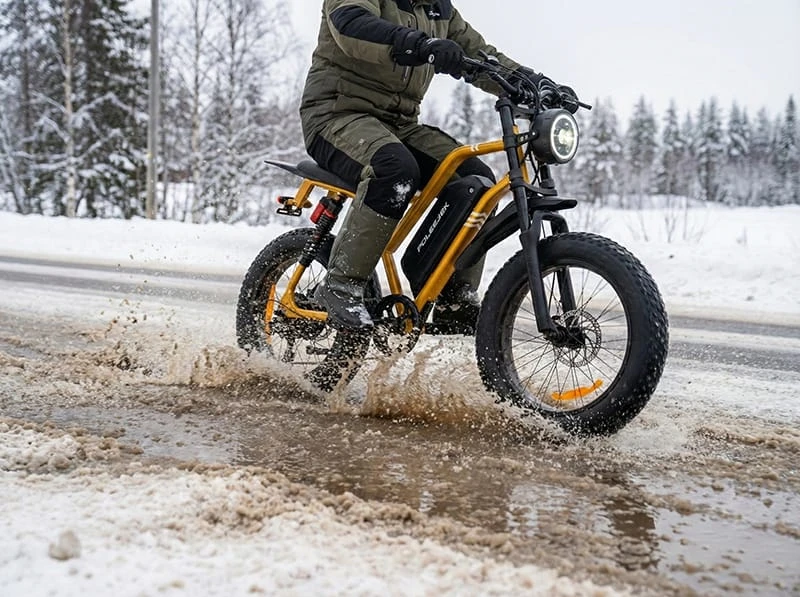
- Splashing from puddles.
- Wet slush kicked up by the tires.
It is NOT designed for:
- Submersion (riding through deep creeks).
- High-pressure washing (jet washing the motor or battery terminals).
The F6 protects its controller and battery connectors with high-quality seals. Unlike many cheap electric dirt bike builds found on generic marketplaces, the F6’s wiring loom is wrapped and connectors are shrouded to prevent short circuits caused by melting snow.
Managing Condensation
After a cold ride, bringing a bike into a warm house can cause condensation to form inside electronics if they aren't sealed well. The F6 uses a sealed display and controller unit to mitigate this, but it is always good practice to let the bike dry in a moderate temperature area (like a garage or hallway) rather than placing it directly next to a high-heat radiator.
Winter Maintenance Checklist for Longevity
Winter is harsh on machinery. The combination of moisture, freezing temperatures, and road salt (used to melt ice) is highly corrosive. To keep your waterproof electric bike running for years, follow this maintenance routine.
1. The Salt Neutralization Protocol
Road salt eats steel and corrodes aluminum. The F6 features a reinforced steel frame that is painted and treated for rust resistance, but no coating is invincible against salt.
- Post-Ride Wipe Down: After every ride on salted roads, wipe the bike down with a damp cloth. You don't need to hose it down (which can introduce water to bearings); just remove the salt residue.
- Focus Areas: Pay special attention to the chain, spoke nipples, and the area around the motor hub axle.
2. Chain Lubrication
Standard "Dry Lube" washes off instantly in snow. Switch to a "Wet Lube" for your chain during winter months. Wet lube is thicker, water-resistant, and protects the chain from rusting. Clean and re-lube your chain weekly if you are riding daily.
3. Battery Care and Range Management
You will notice a drop in range during winter. This is physics, not a defect. Expect a range reduction of roughly 20% to 30% in sub-zero temperatures.
- The F6 Advantage: This is why the 20Ah battery is a critical feature. A smaller 10Ah or 14Ah battery might leave you stranded if range drops by 30%. The F6's massive capacity provides a "buffer," ensuring you can still complete your commute or trail ride even with the efficiency loss caused by the cold.
- Neoprene Covers: Consider buying a neoprene battery cover. It acts as a jacket for your battery, trapping the heat generated during use and helping maintain range.
Related: Confused about battery capacity? Read our article on how far an e-bike can go on one charge.
Top Winter Accessories for Your POLEEJIEK F6
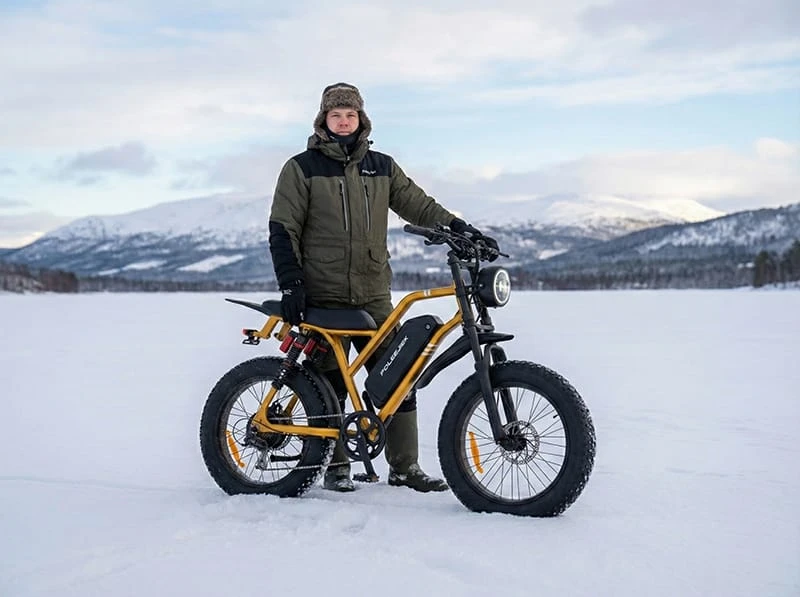
While the F6 comes ready to ride with fenders (a huge bonus for keeping your back dry from slush spray) and a bright LED headlight, a few accessories can elevate your winter experience.
- Bar Mitts (Handlebar Gauntlets): These are neoprene covers that stay attached to your handlebars. You slide your hands (in thinner gloves) inside them. They block the wind completely and allow you to operate the Shimano shifter and throttle with greater dexterity than if you were wearing bulky mittens.
- Studded Tires: If you live in a region that sees more solid ice than soft snow (like parts of the Midwest or Northern Europe), you might consider upgrading to studded fat tires. Metal studs bite into ice, providing traction where rubber cannot. Note that the F6 comes with all-terrain knobby tires which are sufficient for snow, but ice demands studs.
- Helmet Lights: Since winter days are short, visibility is key. While the F6 has a headlight, adding a light to your helmet allows you to see where you are looking, not just where the bike is pointing. This is helpful for spotting branches or obstacles on dark trails.
FAQ: Winter E-Bike Riding
Q: How much does cold weather reduce battery range?
A: In freezing temperatures (32°F/0°C or below), you can expect a temporary range reduction of 20% to 30%. The electrons move slower in the cold. The range returns to normal once the weather warms up. This makes the F6's high-capacity 20Ah battery highly desirable for winter riders.
Q: Can I wash my e-bike in winter?
A: Yes, keeping it clean is vital to remove salt. However, use a bucket and sponge or a low-pressure spray bottle. Never use a high-pressure power washer, as it can force water past the IP54 seals and into the motor bearings or controller.
Q: Is it safe to leave my e-bike outside in the snow?
A: Short term (while at a shop or office), yes. Long term, no. Extreme cold can discharge the battery, and moisture can eventually penetrate components. If you must park outside, remove the battery and bring it inside with you.
Conclusion
Don't let the calendar dictate your riding schedule. The winter landscape offers a solitude and beauty that few get to experience. With the POLEEJIEK F6, you have a machine built with the power, stability, and battery capacity to handle the elements.
By lowering your tire pressure, dressing appropriately, and caring for your battery, you can transform your vehicle from a summer cruiser into a capable electric snow bike.
Ready to conquer the snow? Order the All-Weather POLEEJIEK F6 today.
Shop Fat Tire E-Bikes